

Jamestown Parkway
Guilford County, NC
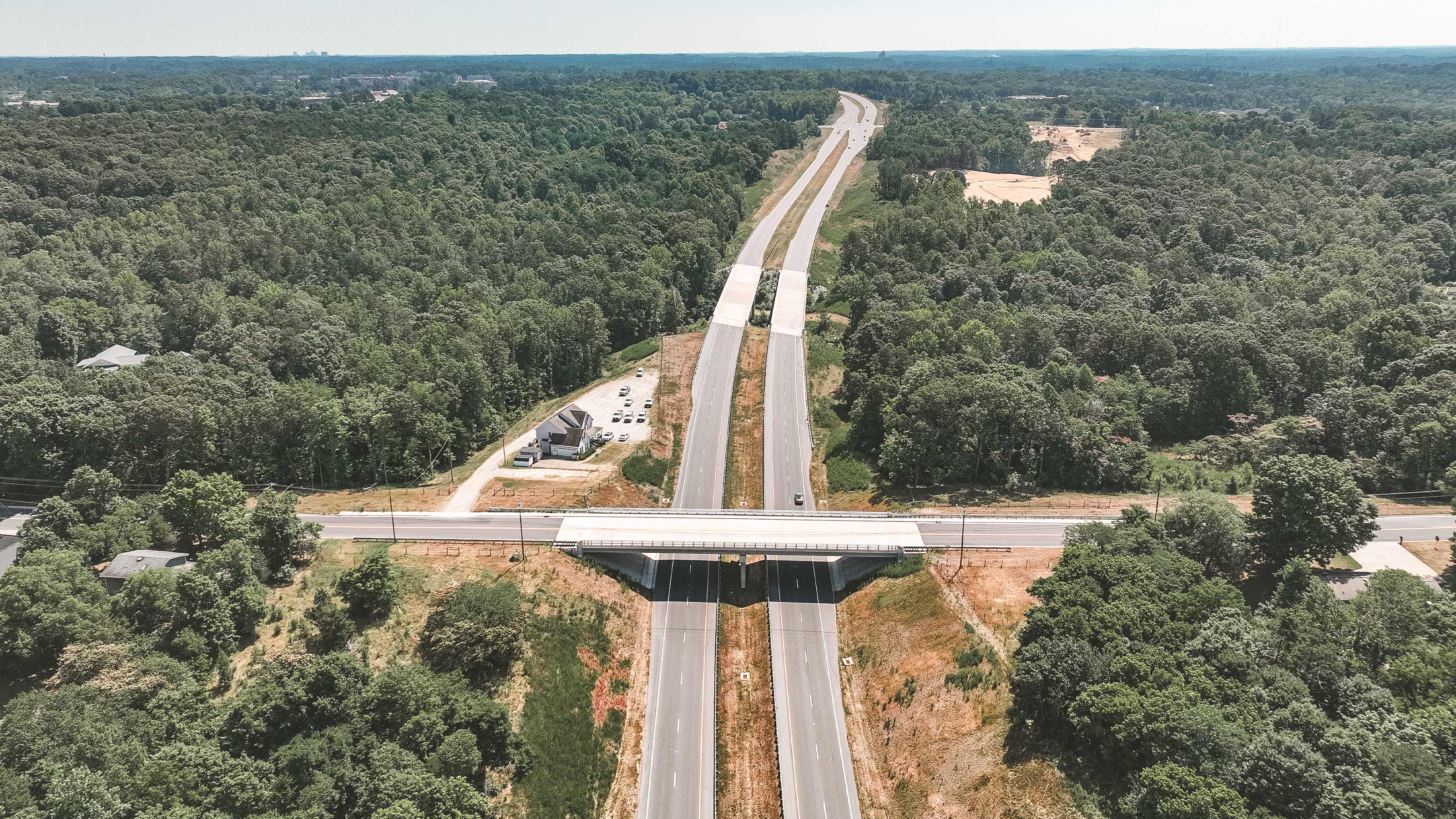
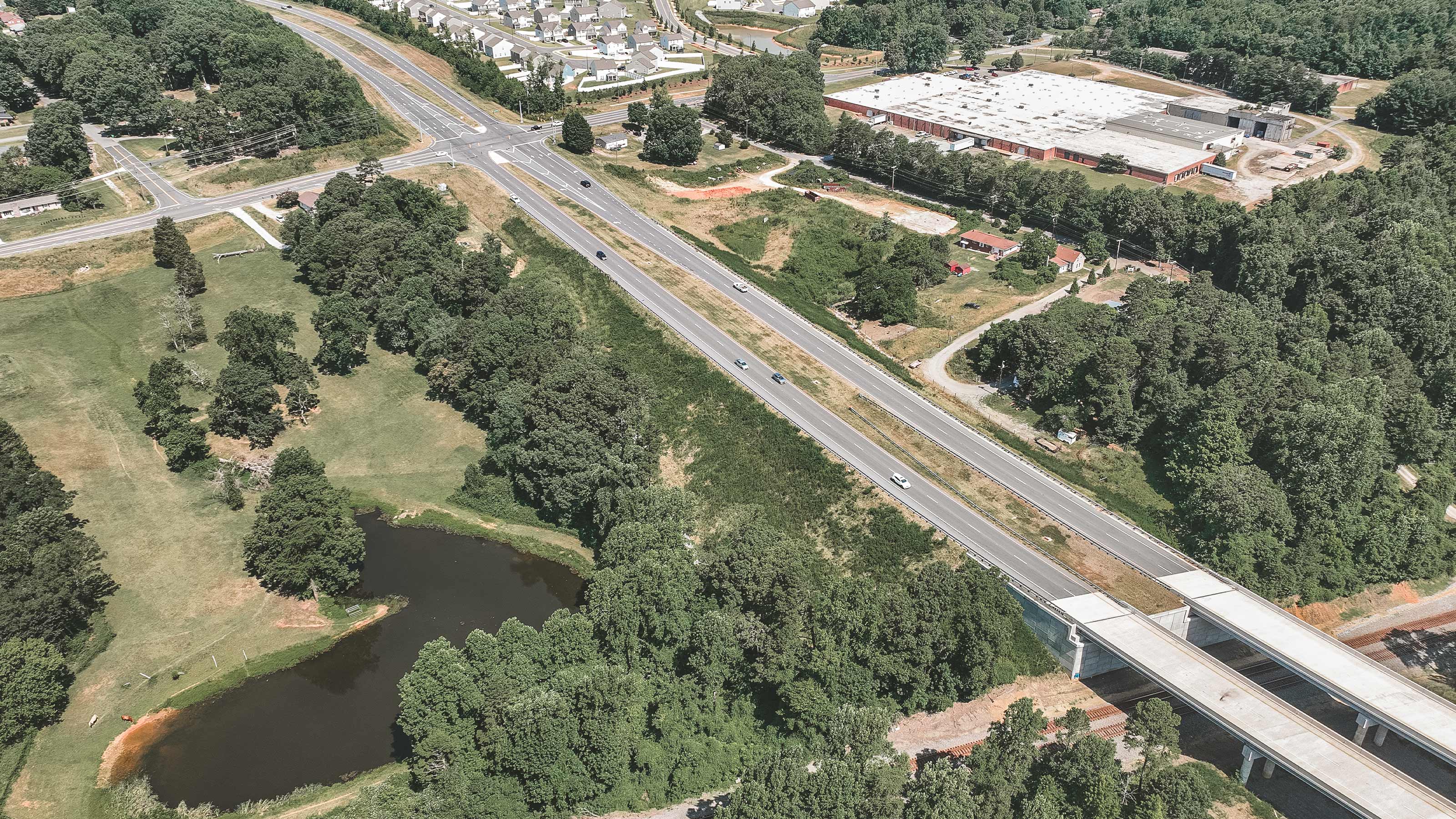
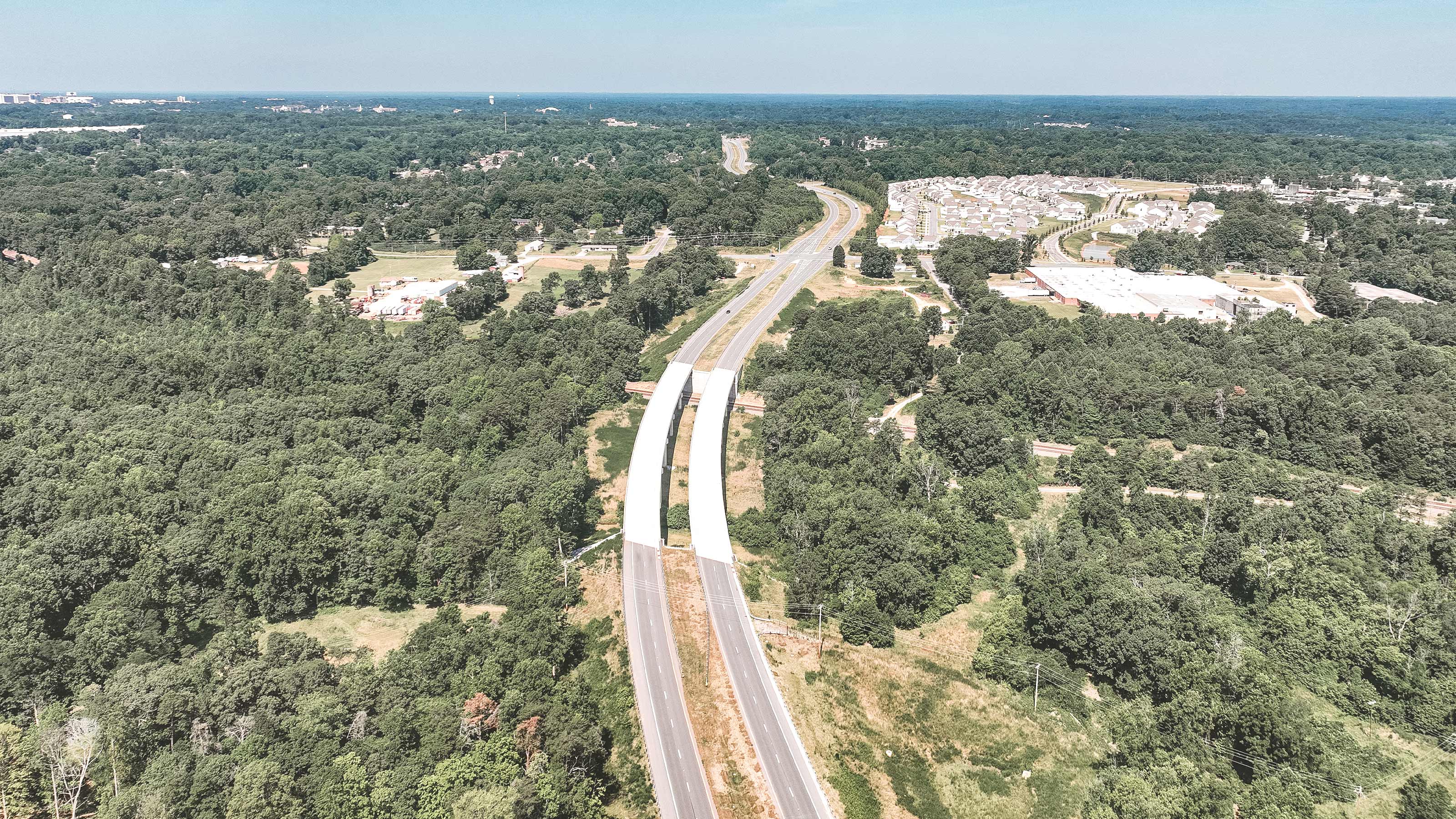
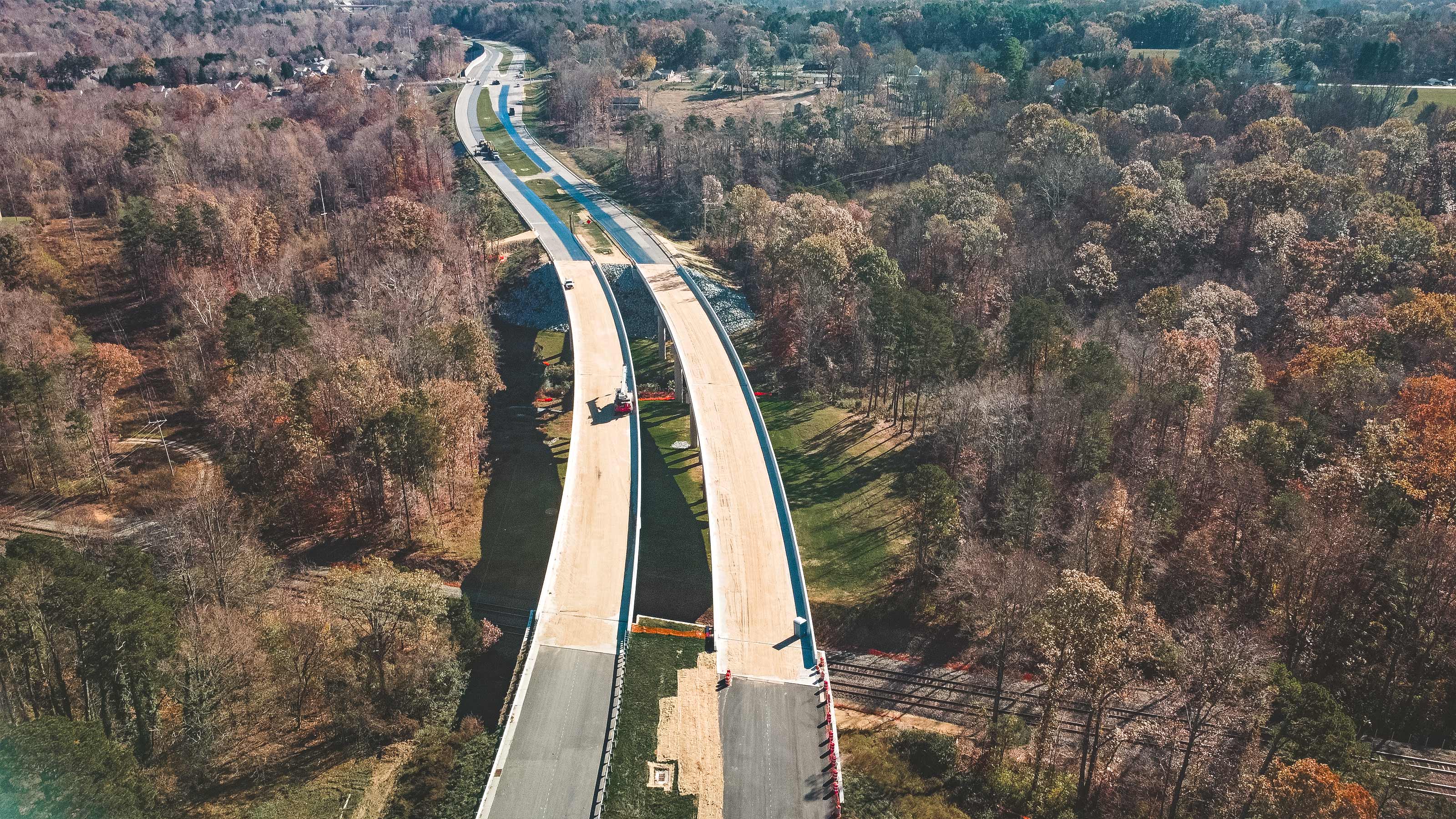
Jamestown Parkway transformed High Point Road into a higher-capacity east–west corridor, connecting the I-74/US 311 Bypass in High Point to the Greensboro Western Urban Loop (future I-40) in Guilford County, North Carolina. By combining roadway widening, new-location construction, and interchange improvements, the project strengthened a critical link between Greensboro and High Point while improving travel reliability in an already overburdened corridor.
CHALLENGE
In 2016, the existing facility was over capacity, and forecasts showed demand would worsen the conditions. Major improvements were needed. The work carried real-world complexity: building new controlled-access segments alongside an active route with existing access points; coordinating major bridge, blasting, drainage, and wall work; and keeping progress moving through repeated disruptions, including hurricane-driven storm damage, extended utility relocation delays, and COVID-era constraints. Maintaining safe travel and consistent environmental compliance while re-sequencing work around shifting conditions was critical.
SOLUTION
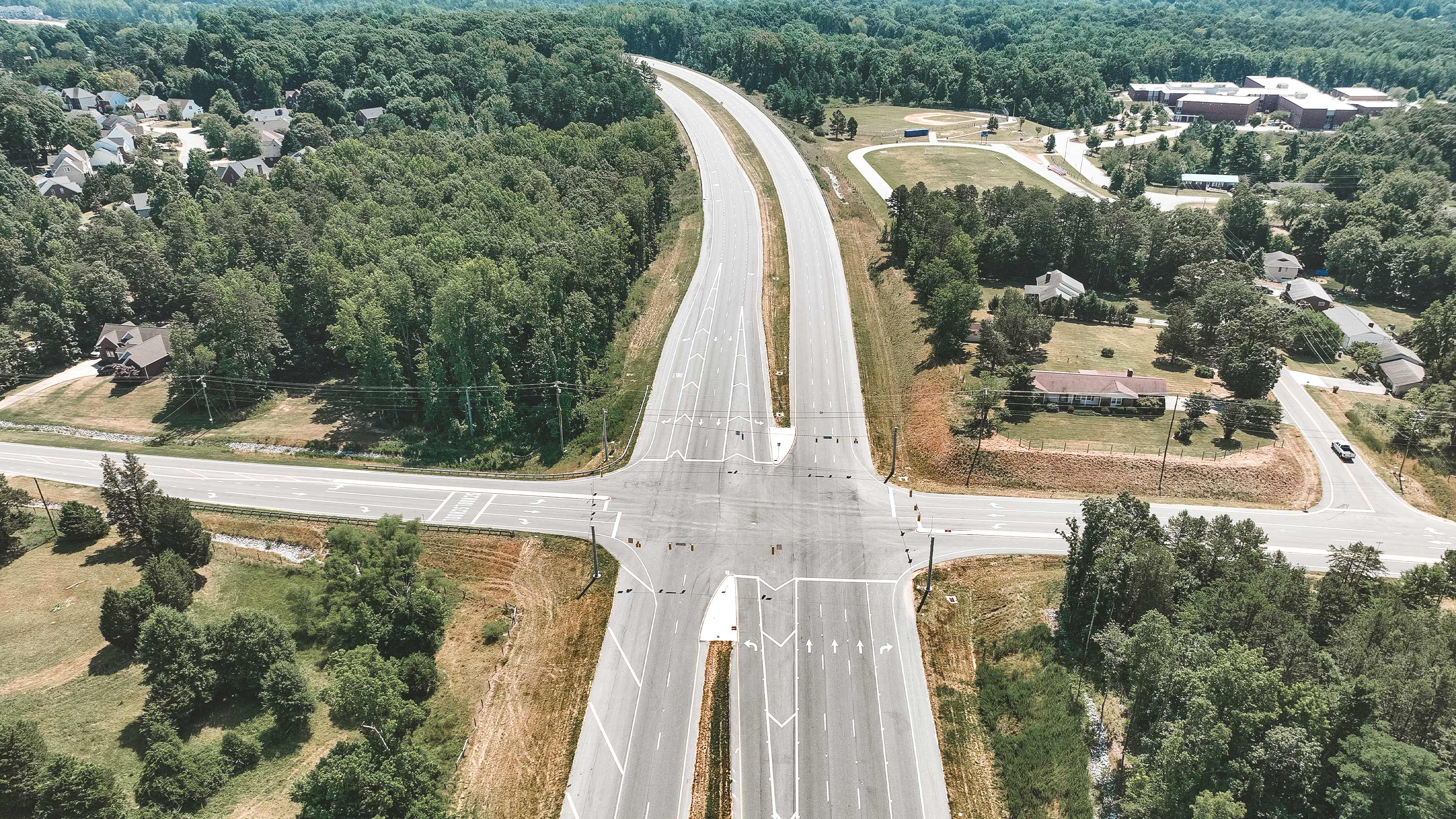
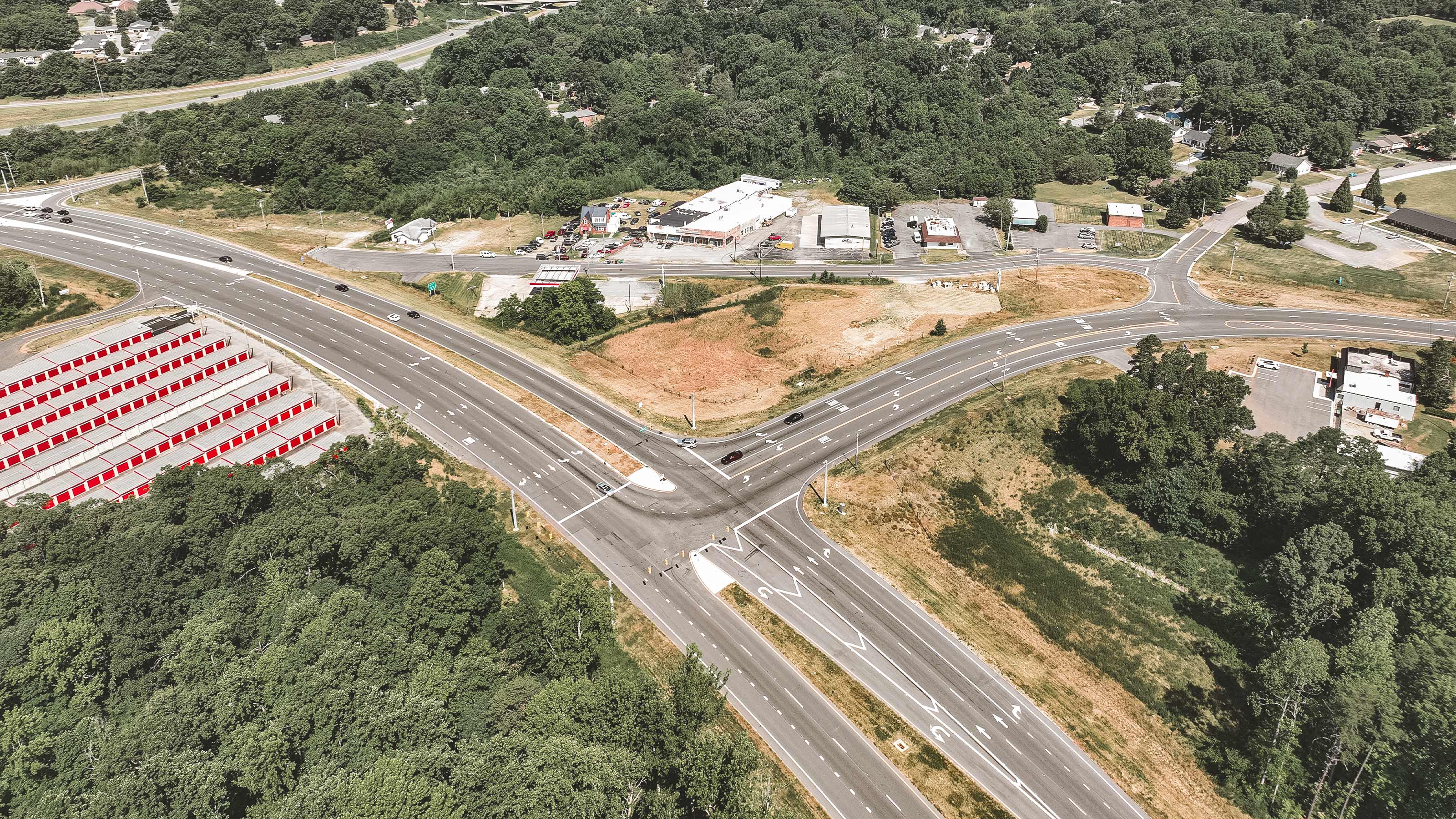
This project combined new alignment and widening to add capacity and modernize the corridor, delivering about four miles of new four-lane highway and one mile of cross-street widening, new interchanges at the US 311 Bypass (future I-74) and the Greensboro Western Urban Loop (future I-40), seven signalized intersections, and seven bridges. Work also included major earthwork and rock excavation, extensive drainage and culvert installation, sound barrier and MSE walls, and soil stabilization. On-stie detours with soil nail wire basket walls were added to keep traffic moving and to speed bridge construction.
Despite severe weather events and repeated impacts to erosion and sedimentation controls, the project maintained strong compliance and kept momentum through re-sequencing, redesign of drainage and sewer plans to work around utility conflicts, and a detour strategy that allowed bridge and grading operations to advance in parallel—delivering a safer, higher-performing corridor that better serves the region’s long-term growth.
Virginia Department of Transportation
Design-Bid-Build